Market Intelligence
Metals & Rare Coins
An exclusive briefing on structural supply deficits, institutional demand drivers, and the strategic case for physical asset ownership in an era of monetary transformation.
Hard Asset Management Inc.
Hard Asset Management Inc. is one of the world's premier rare coin and precious metals dealers. With over 40 years of experience and more than $1 billion in transactions, we assist individuals and family offices in the acquisition of select U.S. and world rare coins and precious metals.
We specialize in identifying high-value assets that offer potential protection against inflation, currency devaluation, and economic downturns — providing our clients with institutional-grade intelligence and access to markets typically reserved for the world's most sophisticated investors.
In an Era of Record Debt, Physical Assets Provide Essential Stability
As governments worldwide accumulate unprecedented levels of debt — the U.S. national debt now exceeds $38.8 trillion — the purchasing power of paper currency faces structural erosion. Physical hard assets have historically served as a reliable store of value across monetary cycles, geopolitical upheaval, and inflationary periods.

The Anchor of
Preservation
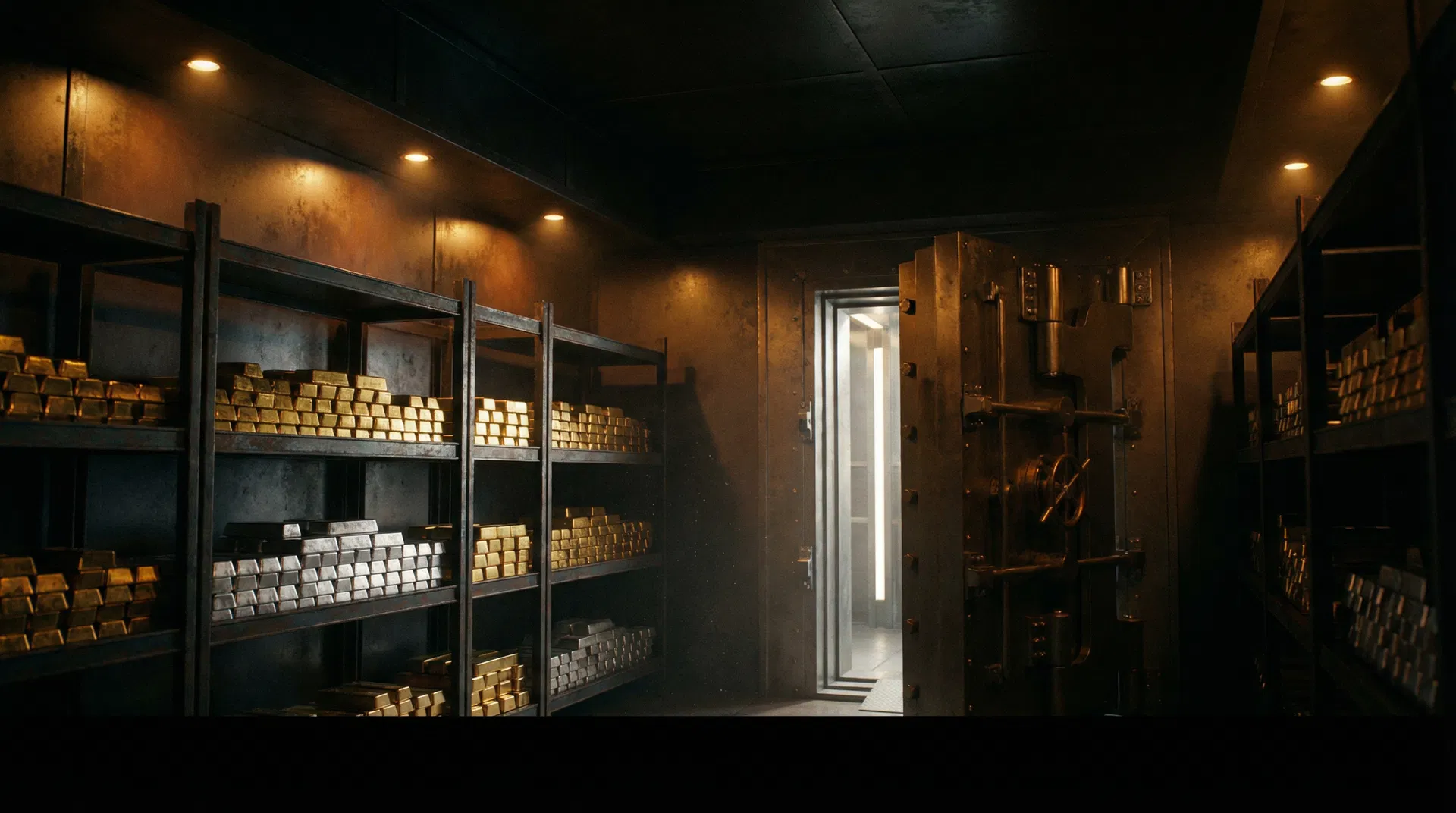
Gold remains the premier hedge against economic uncertainty, with a track record of outpacing inflation across centuries of monetary history. Its role as a reserve asset is being reinforced by institutional actors at the highest levels of global finance.

The Strategic
Industrial Metal
Silver occupies a unique position in global markets — simultaneously a monetary metal and an indispensable industrial commodity. Unlike gold, silver's demand is driven by irreplaceable technological applications, creating a structural supply deficit that is projected to widen significantly through 2030.
The Growing Silver Deficit: 2024–2030
Annual deficit projections (billion troy ounces)
Historical figures (2024–2025) sourced from the World Silver Survey 2025. 2030 projections represent consensus analyst modeling based on established structural growth trends in green energy and AI infrastructure.
- Demand
- Supply
| Year | Annual Demand | Annual Supply | Deficit | YoY Change |
|---|---|---|---|---|
| 2024 | 1.15B oz | 1.02B oz | −0.13B oz | — |
| 2026 | 1.22B oz | 1.06B oz | −0.12B oz | −7.7% |
| 2028 | 1.28B oz | 1.08B oz | −0.20B oz | +66.7% |
| 2030 | 1.38B oz | 1.10B oz | −0.28B oz | +40.0% |
Primary Silver Demand Sectors
Projected 2030 consumption (million troy ounces) — Analyst Models
Source: World Silver Survey 2025 (historical deficits); Consensus Market Projections (2026). Current supply/demand imbalances are “clearly unsustainable” — World Silver Survey 2025.
PGM Market Spotlight: Structural Shortages
The Platinum Group Metals — platinum, palladium, and rhodium — are facing severe structural imbalances. Their extreme geographic concentration in South Africa and Russia creates supply chains that are uniquely vulnerable to geopolitical disruption, labor action, and regulatory change.
President Trump signed four executive orders on nuclear energy, targeting an expansion of American nuclear capacity from approximately 100 GW today to 400 GW by 2050 — a quadrupling of output. This structural shift in energy policy creates a powerful new demand driver for all three platinum group metals, each of which plays an irreplaceable role in nuclear reactor safety and operations.
| Metal | 2025 Deficit | Primary Driver | Rarity vs. Silver |
|---|---|---|---|
| Platinum | −1,082 koz | Automotive catalysts & industrial demand | ~30× rarer than gold |
| Palladium | Ongoing | 80% supply from Russia & South Africa | ~15× rarer than gold |
| Rhodium | Structural | Emissions control, zero substitutes | ~800× rarer than silver |
Sources: World Platinum Investment Council (WPIC) Q4 2025 Platinum Quarterly; Johnson Matthey PGM Market Report 2025; BASF Catalysis Division Annual Report 2024; Sprott Special Report; The Oregon Group; Statista.
The backbone of nuclear plant safety instrumentation, platinum resistance sensors monitor coolant temperatures in real time, feeding the control systems that keep reactors stable. As nuclear capacity quadruples toward 400 GW, the demand for precision platinum sensors scales proportionally.
Three consecutive annual deficits representing approximately 12% of global demand. The structural shortfall is deepening precisely as nuclear energy policy accelerates demand.
Source: Sprott Special Report — "Platinum Is On Track for a Status Upgrade" (sprott.com/insights/platinum-is-on-track-for-a-status-upgrade/)
Palladium's singular ability to absorb and release hydrogen makes it essential for managing gas pressure and tritium handling in nuclear reactor vessels. Found in only a handful of locations globally, its supply concentration amplifies the strategic risk of any demand surge.
Source: The Oregon Group — Critical Minerals and Energy Intelligence (theoregongroup.com/commodities/platinum/palladium-market-confronts-deficits-amid-north-americas-push-for-supply-security/)
Rhodium neutron detectors serve as the "eyes" inside an operating reactor core, providing continuous, real-time measurement of neutron flux levels critical to safe power output. There is no viable substitute for rhodium in this application.
Rhodium is considered one of the rarest and most valuable metals in the world, occurring in the Earth's crust at a rate of around one part per 200 million. Its role in three-way catalytic converters and reactor neutron detection makes it structurally irreplaceable.
Source: Statista — Rhodium Supply Worldwide (statista.com/statistics/592714/supply-of-rhodium-worldwide/)
Asymmetric Value
Through Absolute Scarcity
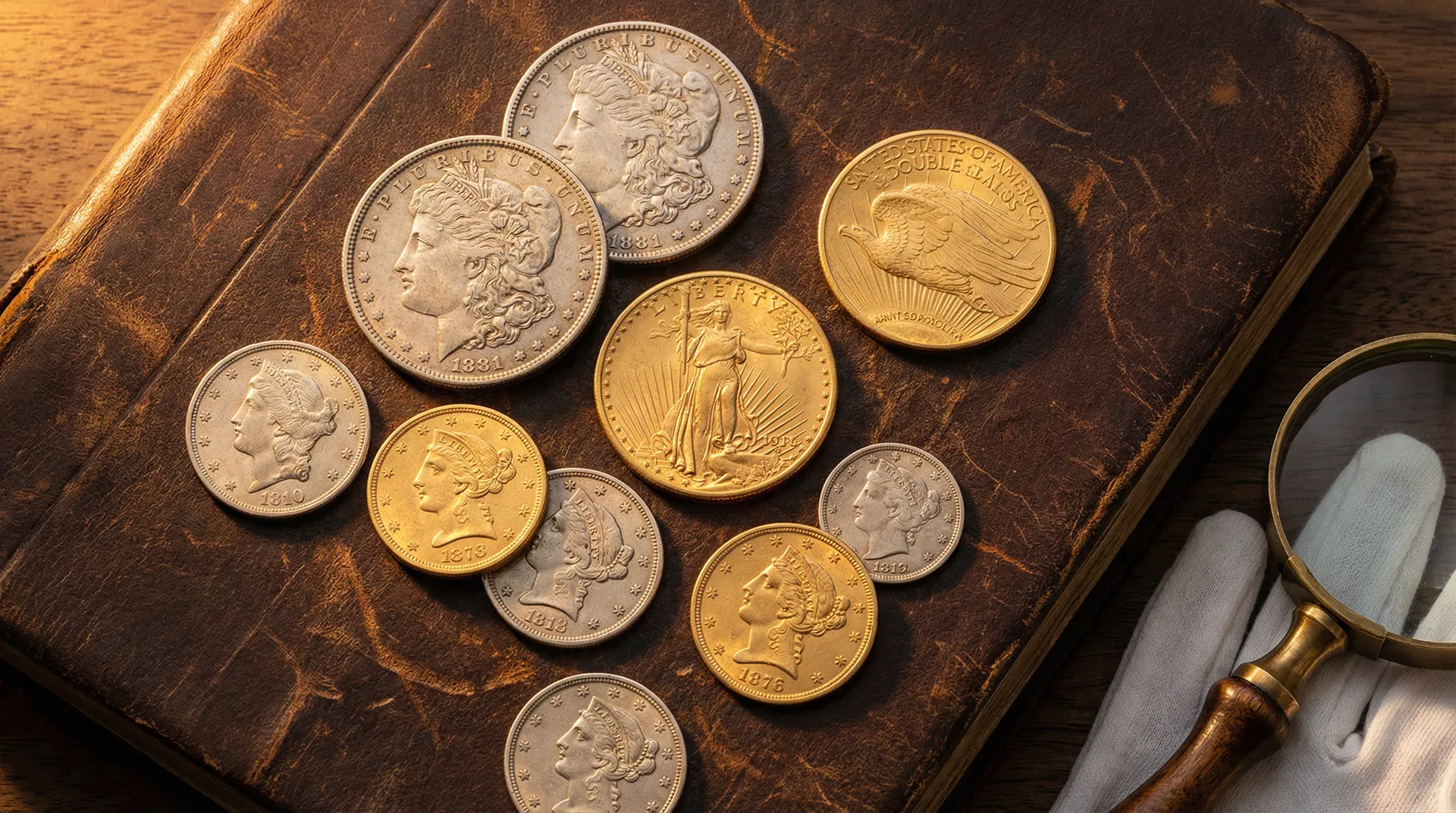
Rare and ultra-rare coins occupy a category entirely distinct from bullion. Their value is driven not by metal content alone, but by absolute scarcity and historical significance — qualities that cannot be replicated or inflated away.
Global Auction Results: 2025–2026
Recent global auction results demonstrate that elite rare coins are recognized as top-tier capital assets by the world's most sophisticated collectors and investors.
Auction data: Heritage Auctions (Dec 2025, Jan 2026); Stack's Bowers Galleries (Nov 2025). Census data: PCGS Population Report. See References section for expanded numismatic context.

CBDCs & the
Closing Window
Governments worldwide are rapidly dismantling paper currency in favor of Central Bank Digital Currencies (CBDCs). This transition represents the most significant restructuring of the global monetary system since the abandonment of the Bretton Woods gold standard in 1971.
De-Dollarization & the BRICS "Unit"
The BRICS alliance is actively reducing dependence on the U.S. dollar as the world's reserve currency. Combined with U.S. national debt exceeding $38.8 trillion, this structural shift represents a fundamental challenge to dollar-denominated wealth.
As the U.S. dollar faces structural pressure from de-dollarization, CBDC implementation, and record debt levels, the case for holding physical assets outside the traditional financial system has never been more compelling. Gold, silver, and rare coins represent a time-tested form of financial sovereignty.
Begin Your Hard Asset Strategy
With over 40 years of experience and more than $1 billion in transactions, Hard Asset Management Inc. provides institutional-grade access to the world's most sought-after precious metals and rare coins. We invite you to begin a confidential consultation.

With over 40 years at the forefront of the rare coin and precious metals industry, Christian Briggs has guided individuals and family offices through every major monetary cycle. His institutional-grade perspective and deep market relationships provide clients with access to opportunities rarely available to the general public.
Join the conversation on the real issues impacting your wealth, money, and future. Available on Apple Podcasts, Google Podcasts, and Spotify.
The information contained in this brochure is provided for general informational purposes only and does not constitute investment advice, financial advice, legal advice, or any other form of professional advisory services. Hard Asset Management, Inc. (HAM) is a dealer in physical precious metals and numismatic coins and is not a registered investment adviser, broker-dealer, or financial institution. Precious metals and rare coins are tangible assets whose market values fluctuate based on numerous factors, including but not limited to spot price movements, numismatic demand, grading standards, economic conditions, currency fluctuations, and geopolitical events. Past performance and historical pricing trends do not guarantee future results. The value of any item purchased from HAM may increase, decrease, or remain unchanged after purchase. All sales are final unless otherwise expressly stated in a written agreement signed by an authorized representative of HAM. Purchasers are encouraged and expected to conduct their own independent research, due diligence, and appraisal prior to purchase. HAM makes no representations or warranties, express or implied, beyond those explicitly set forth in the applicable sales documentation.
HAM does not act as a fiduciary, financial adviser, or investment manager on behalf of any customer. No fiduciary duty, advisory relationship, or obligation to act in a customer's best interest is created by any transaction, communication, or course of dealing with HAM. Customers are solely responsible for their own investment and purchasing decisions. HAM's representatives may provide general product information, but such information does not constitute personalized financial advice and should not be relied upon as such.
Investing in or purchasing precious metals and rare coins involves significant financial risk. The market value of precious metals and numismatic items can be highly volatile and is subject to rapid and unpredictable change. You may receive substantially less than the amount you paid, and in adverse market conditions, YOU COULD LOSE ALL OR A SIGNIFICANT PORTION OF YOUR INVESTMENT. You should only purchase precious metals or rare coins with funds you can afford to lose and after carefully considering your overall financial situation.
Items sold by HAM are acquired for investment purposes. The purpose of investment is not for consumer use, but for investment. Precious metals may serve as a store of value, a portfolio diversification tool, or a long-term asset. Numismatic coins may be purchased for their collector value, historical significance, or as a long-term investment asset. HAM makes no representation that any item is suitable for any particular investment purpose, and the suitability of a purchase is solely the determination of the buyer.
Numismatic (collector) coins are valued primarily for their rarity, condition, historical significance, and collector demand. Bullion coins and bars are valued primarily based on prevailing spot prices plus market premiums for the underlying metal. These product categories carry different risk profiles, liquidity characteristics, and resale considerations. Buyers should understand the distinction before purchasing.
Coin grades assigned by third-party grading services (such as PCGS or NGC) reflect the opinion of the grading service at the time of certification. HAM does not independently certify or guarantee the accuracy of third-party grades. Grading is inherently subjective, and the assigned grade of a coin may differ among qualified numismatists or upon resubmission.
Precious metals and rare coins are not as liquid as publicly traded securities. Resale prices are subject to bid-ask spreads, dealer premiums, and prevailing market conditions at the time of sale. HAM does not guarantee repurchase of any item previously sold and is under no obligation to offer a buyback at any particular price.
Purchases and sales of precious metals and rare coins may have federal and/or state tax implications, including capital gains tax reporting obligations. HAM does not provide tax advice. Buyers are strongly encouraged to consult a qualified tax professional regarding the tax treatment of precious metals and numismatic transactions applicable to their individual circumstances.
Precious metals and rare coins offered by Hard Asset Management are investment products, not consumer goods. Purchases of gold, silver, platinum, palladium, and numismatic coins are made for the purpose of capital preservation, portfolio diversification, wealth storage, or speculative investment, and are not acquired primarily for personal, family, or household use. As investment instruments, these products are subject to market fluctuation, and their value is determined by factors including spot prices, numismatic grade, market demand, and macroeconomic conditions — all of which are beyond the control of HAM.
This brochure does not constitute a solicitation to buy or sell any security, commodity futures contract, or regulated financial instrument. Precious metals and rare coins are tangible goods, not securities, and transactions in physical metals are generally not regulated by the U.S. Securities and Exchange Commission (SEC) or the Commodity Futures Trading Commission (CFTC).
If you have questions about any item, its provenance, grading, pricing, or terms of sale, please speak with a HAM representative prior to completing your purchase. We are committed to transparent, good-faith dealing with every customer.
[1] World Silver Survey 2025 — The Silver Institute / Metals Focus (historical supply-demand data and deficit figures 2024–2025)
[2] Consensus Market Projections (2026) — based on World Silver Survey 2025 structural growth trends in green energy and AI infrastructure
[3] “Current supply/demand imbalances are 'clearly unsustainable'” — World Silver Survey 2025, The Silver Institute
[4] IEA World Energy Outlook 2024 (solar PV silver intensity projections)
[5] BloombergNEF Electric Vehicle Outlook 2025 (EV silver demand modeling)
[1] World Gold Council — Gold Demand Trends Q4 2025 (central bank accumulation data)
[2] IMF World Economic Outlook 2025 (de-dollarization and reserve currency trends)
[3] BRICS Summit Communiqué 2024 (Unit concept and gold-backed trade framework)
[4] U.S. Treasury Fiscal Data — National Debt as of Q1 2026
[5] Atlantic Council CBDC Tracker — 134 countries, 98% of global GDP (March 2026)
[1] World Platinum Investment Council (WPIC) — Platinum Quarterly Q4 2025 (platinum deficit: −1,082 koz)
[2] Johnson Matthey PGM Market Report 2025 (palladium supply concentration and structural deficit)
[3] BASF Catalysis Division Annual Report 2024 (rhodium demand in three-way catalytic converters)
[4] Anglo American Platinum Production Report 2025 (South African supply constraints)
[5] Sibanye-Stillwater Annual Report 2024 (labor and power cost pressures on PGM output)
[1] Heritage Auctions — Dec 2025 sale: 1804 Draped Bust Dollar (James A. Stack specimen, 16th known; census of 15 unchanged since 1962)
[2] Heritage Auctions — Jan 2026 sale: 1804 Draped Bust Dollar Class III (PR58), $3,538,000
[3] Stack's Bowers Galleries — Nov 2025 sale: 1927-D Saint-Gaudens Double Eagle (~14–15 known; rarest regular-issue gold coin of the 20th century), $3,840,000
[4] Stack's Bowers Galleries — Nov 2025 sale: 1794 Flowing Hair Silver Dollar, $4,500,000
[5] PCGS Population Report (coin census data); NGC Census Report
[6] Rare Coin Market Report 1979–2022 — 9.5% avg. annual return vs. 5.6% gold (Professional Numismatists Guild)
The data and facts set forth in this brochure are based on reliable, publicly available sources. Hard Asset Management, Inc. is not responsible for any inaccuracies that may exist; any such inaccuracy is unintentional. All projections represent third-party analyst modeling and consensus estimates, not guarantees of future performance.